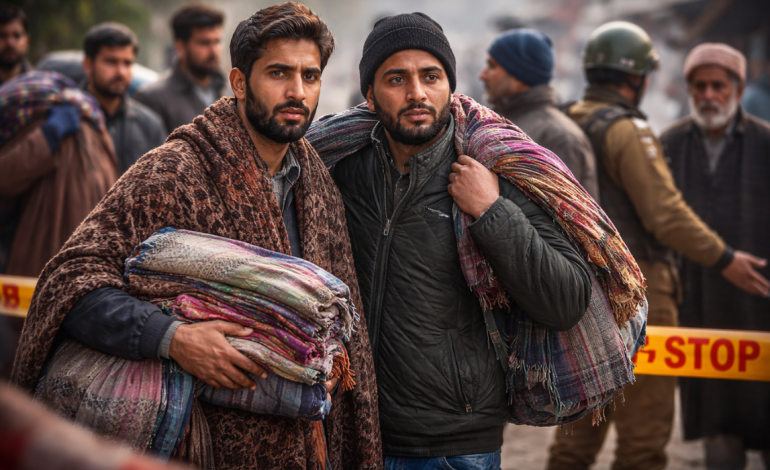

Reports of harassment and violence against Kashmiri traders traveling across different parts of the country have raised serious concerns about their safety and economic survival. Shawl sellers and handicraft vendors from Kashmir often move seasonally to sell goods, but recent incidents of hostility have forced many to reconsider their livelihoods.
Rising Incidents in Haryana and Other Regions
A 28-year-old shawl vendor reported organizing a safety-focused WhatsApp group after multiple cases of intimidation and harassment. Members of the group share information about areas where traders can operate safely and regions where risks have been reported.
In one widely circulated incident, an 18-year-old shawl seller and his brother were allegedly assaulted in Uttarakhand. The attack reportedly resulted in serious injuries, including head wounds and fractures. The victim stated that he was targeted because of his identity as a Kashmiri trader.
Such incidents are part of a broader pattern of hostility reported by seasonal traders and migrant workers. Videos and social media posts documenting some of these events have intensified concerns about growing intolerance and security challenges.
Economic Dilemmas and Safety Concerns
Many Kashmiri traders rely on seasonal business in northern Indian states to sustain their families. However, increasing reports of harassment have forced some to return home, leaving behind unsold goods and lost income.
Traders describe situations where they were questioned, threatened, or asked to leave areas where they were conducting business. In several cases, shawls and merchandise were reportedly discarded or confiscated, compounding financial losses.
The economic impact of these incidents is significant, as many families depend on small-scale handicraft sales for survival. Rising unemployment in Kashmir has already pushed young traders to seek opportunities outside the region.
Political and Social Reactions
Political parties in Kashmir, including the governing National Conference and the opposition Peoples Democratic Party, have urged authorities to address the issue of attacks on traders.
Officials emphasize that such incidents undermine social harmony and the constitutional rights of citizens to pursue livelihoods across the country. Local leaders have called for stronger law enforcement measures to prevent violence and protect migrant communities.
Representatives of the ruling party, including members of the Bharatiya Janata Party, have condemned violence against traders, stating that discrimination and harassment have no place in society. However, critics argue that stronger action is needed to ensure accountability.
Broader Concerns About Social Harmony
Analysts and human rights observers note that incidents targeting Kashmiri traders reflect deeper challenges of social polarization. Seasonal workers and small vendors often face vulnerabilities due to their mobility and limited local networks.
The debate has also highlighted concerns about rhetoric that portrays certain communities as security threats or outsiders. Experts warn that such narratives can fuel prejudice and undermine economic integration.